

Currently Empty: ₹0.00



Professional Communication
The Difference Between Classical Arabic and Kuwaiti Dialect
- November 13, 2023
- Com 0
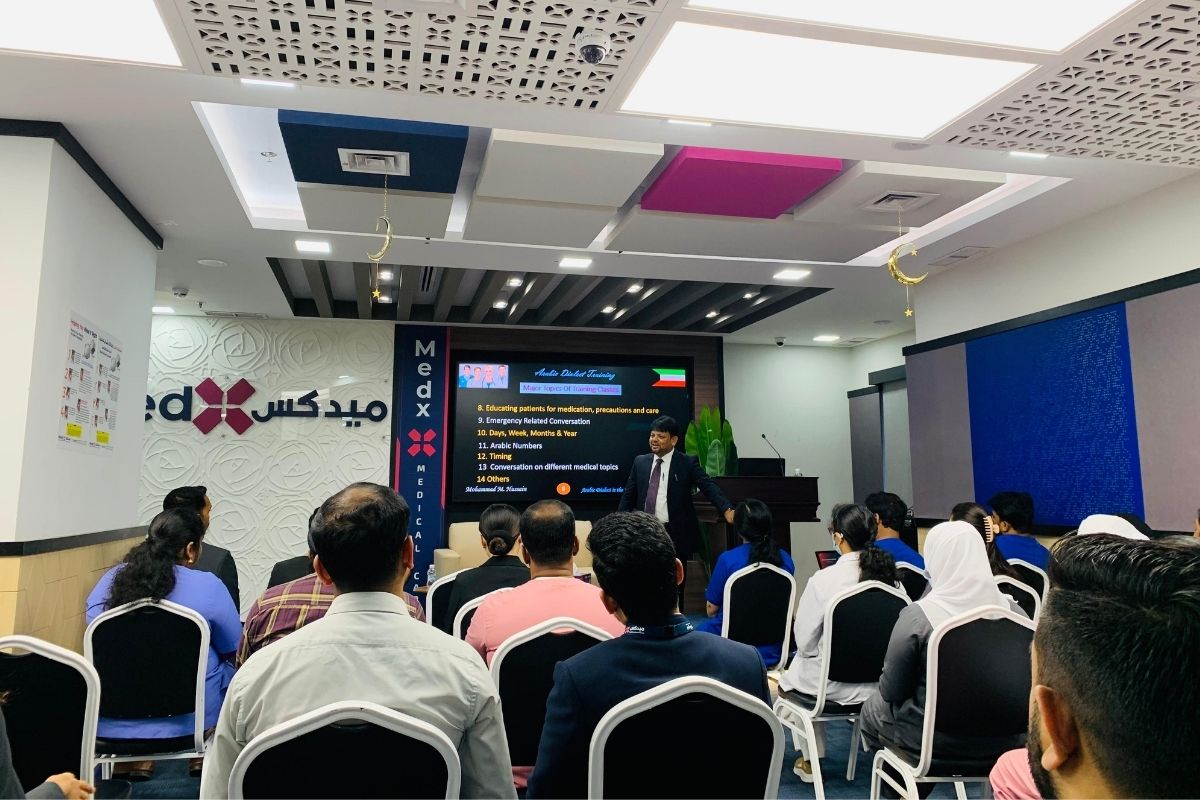
Arabic is one of the richest languages in the world, but many newcomers to Kuwait quickly discover that the Arabic they hear on the street sounds very different from the Arabic they see in books. That’s because there are two major forms you will encounter: Classical Arabic (Fus’ha) and the Kuwaiti Dialect (Gulf Dialect).
Understanding the difference helps expats, professionals, and students communicate more confidently and integrate faster into daily life in the Gulf.
Want to Learn Practical Kuwaiti Arabic?
If you’d like to understand Kuwaiti dialect as it’s spoken in daily life, our Common Arabic & Kuwaiti Dialect Training gives you the exact vocabulary, tone, and expressions used in Kuwait.
Simple, clear, and designed for expats and professionals.
Online + Offline batches available.
1. What Is Classical Arabic (Fus’ha)?
Classical Arabic is the formal and traditional form of the language. It is used in:
- Quranic recitation
- Formal speeches
- News broadcasts
- Government documents
- Academic writing
It follows strict grammar rules and has a highly structured vocabulary. Though it is commonly understood across the Arab world, it is rarely used in daily conversation.
2. What Is the Kuwaiti Dialect?
The Kuwaiti dialect (part of the Gulf Arabic family) is the language spoken in everyday life in Kuwait. It is informal, friendly, and filled with unique expressions. It is what you will hear in:
- Shops and markets
- Taxis and restaurants
- Offices and work environments
- Schools and neighborhoods
- Social gatherings
Kuwaiti dialect is shaped by regional history and has influences from Persian, English, Hindi, Turkish, and other Gulf languages.
Common Features of Kuwaiti Dialect:
- Softer pronunciation
- Shorter phrases
- Local slang and expressions
- Different verb patterns
- Practical daily vocabulary
3. Key Differences Between Classical Arabic and Kuwaiti Dialect
- Grammar Structure
- Classical Arabic:
- Follows strict grammar (i‘raab)
- Uses full vowel endings
- Long sentence structure
- Kuwaiti Dialect:
- More flexible grammar
- Dropped endings
- Short, conversational sentences
Example:
- Classical Arabic: Kayfa haluka?
- Kuwaiti Arabic: Shlonak?
- Vocabulary Used
Many everyday words are different.
- Classical: Al,aan (Now)
- Kuwaiti: Alheen
- Classical: lemaathaa (why)
- Kuwaiti: Lesh
- Classical: Ureed (I want)
- Kuwaiti: Abi
Some Gulf words don’t exist in Classical Arabic at all—they developed locally.
- Pronunciation Differences
Gulf Arabic has unique sounds:
- The letter ج is often pronounced “Y” as in Yamal (for Jamal)
- The letter ق is often pronounced “G” like Galb instead of Qalb
These differences make spoken Kuwaiti sound warm and rhythmic compared to formal Arabic.
- Usage in Daily Life
- Classical Arabic is used in formal contexts only.
- Kuwaiti Arabic is used everywhere else — for work, market, home, socializing, customer service, etc.
For communication in Kuwait, dialect is far more useful.
Learn Kuwaiti Arabic the Smart Way
Our instructor has more than 10+ years of experience teaching Gulf dialects to professionals, students, and newcomers.
You’ll learn:
- Daily communication
- Workplace Arabic
- Cultural etiquette
- Common idioms and expressions
Perfect for those living or planning to move to the GCC.
4. Which One Should You Learn First?
If you are living in Kuwait or planning to relocate, start with Kuwaiti Dialect. It helps you:
- Communicate with locals easily
- Manage daily tasks
- Build friendships
- Excel in workplaces
- Understand cultural expressions
Classical Arabic can come later if you want to explore the deeper, literary, or religious aspects of the language.
Most expatriates find that knowing the dialect gives immediate practical benefits.
5. How Learning Kuwaiti Arabic Transforms Your Experience
Whether you’re a student, working professional, homemaker, or corporate executive, learning the dialect helps you:
- Feel confident in real interactions
- Understand conversations around you
- Express yourself politely and clearly
- Improve your job prospects in the GCC
- Integrate into society faster
Even learning 50–100 commonly used words can make a huge difference.
Understanding the difference between Classical Arabic and the Kuwaiti Dialect is the first step toward meaningful communication in Kuwait. Classical Arabic gives you structure, but the Kuwaiti dialect gives you connection — the kind that helps you thrive in daily life, work environments, and social settings.
Whether you’re new to Kuwait or planning to move soon, learning the dialect brings you closer to the culture, the people, and the Gulf lifestyle.
Ready to Speak Like a Local?
Join our Kuwaiti Dialect Training Program designed for:
- Expats
- Students
- Professionals
- Families
- Newcomers to Kuwait
Learn real phrases, real pronunciation, and real conversations used in Kuwait every day.
Tags: